For many large bakeries, growth brings new challenges. Dough consistency becomes harder to maintain, production slowdowns become more noticeable, and adding more mixers is not always the most efficient solution. Instead of working around those problems, many bakeries are rethinking how dough is made altogether.
Advanced continuous mixing equipment from Exact Mixing offers a different way forward.
Better Product Consistency at Scale
One of the biggest reasons bakeries invest in continuous mixing technology is consistency.
In high-volume production, even small variations in dough hydration, ingredient distribution, or development can affect loaf volume, crumb structure, proofing, texture, and finished appearance. What seems like a minor issue in one batch can quickly multiply across thousands of products.
Continuous mixing helps reduce that variability by maintaining a more controlled process. Instead of producing one batch at a time, ingredients are metered continuously into the system, helping maintain more stable dough conditions over long runs.
Research comparing batch and continuous mixing has shown that continuous systems reduce variation in key dough characteristics, helping bakeries produce more consistent finished products throughout the production process.
Increase Capacity Without Added Complexity
As bakeries grow, increasing output with batch systems often means adding more equipment, labor, and floor space.
With continuous mixing, on the other hand, dough moves through the system continuously, and bakeries avoid the repeated downtime between batch cycles. Production keeps moving without frequent stops for unloading and restarting.
This allows manufacturers to support higher throughput while simplifying production flow. For large bakeries producing high volumes every day, uninterrupted production can make a measurable difference in efficiency.
With mixers designed to support a large range of production capacities, Exact Mixing helps bakeries maintain output while reducing unnecessary bottlenecks.
Improve Ingredient Accuracy and Yield
Ingredient precision matters, especially at an industrial scale. Even small inconsistencies in flour, water, or minor ingredients can affect dough quality and create unnecessary product giveaway.
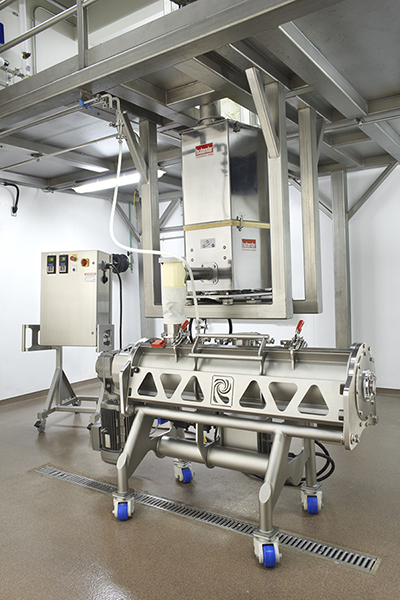
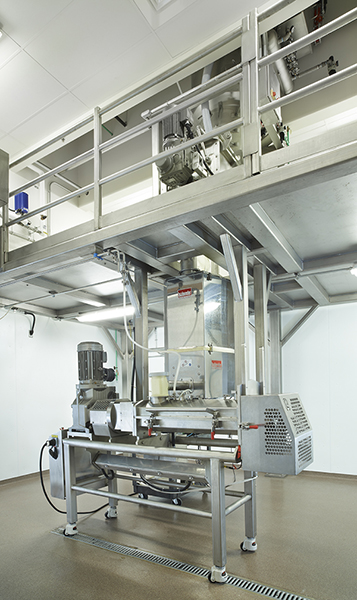
Exact Mixing systems incorporate gravimetric loss-in-weight technology to continuously meter dry ingredients while coordinating liquid additions through controlled delivery systems.
Better ingredient control can mean:
- More consistent dough hydration
- Reduced ingredient giveaway
- Better formulation accuracy
- Higher product yield
Even modest improvements in yield can create meaningful cost savings over time for large-scale operations.
Decrease Labor Demands
Labor shortages continue to affect industrial bakeries, making efficiency more important than ever.
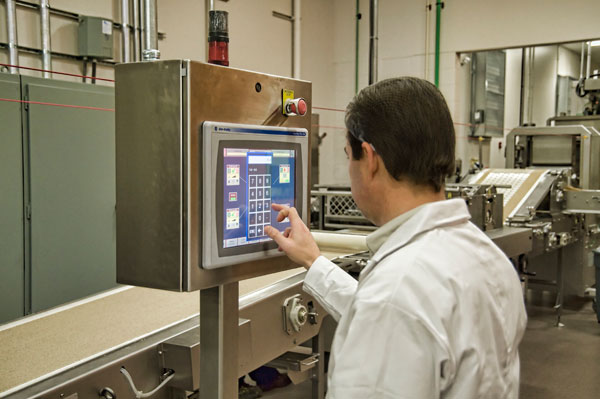
Traditional batch systems often require repeated loading, unloading, monitoring, and resetting throughout production. Continuous systems automate much of that process through integrated ingredient handling and automated controls. Rather than managing repeated mix cycles, operators can focus more on monitoring performance and maintaining process consistency.
Reduce Complexity on the Production Floor
Adding production capacity through multiple batch mixers increases complexity across the floor.
Continuous mixing streamlines production by supporting a more stable dough flow through a single, integrated process. Many bakeries find that this improves floor space utilization while reducing unnecessary handling between production stages.
Exact Mixing’s systems also simplify sanitation and maintenance compared to managing multiple batch mixers across a production line.
A Smarter Way to Support Your Business’s Growth
From improved product consistency and higher throughput to better ingredient control and reduced labor demands, continuous mixing gives bakeries a way to support growth without sacrificing quality.
Wondering if continuous mixing is right for your operations? Try the continuous mixing calculator or contact Exact Mixing to learn more.