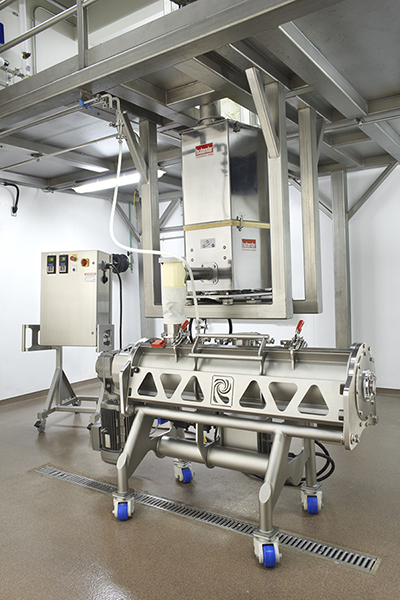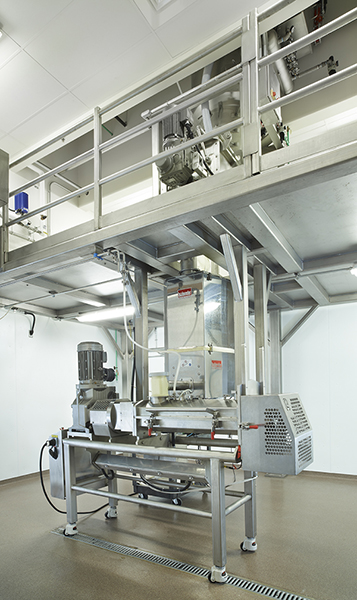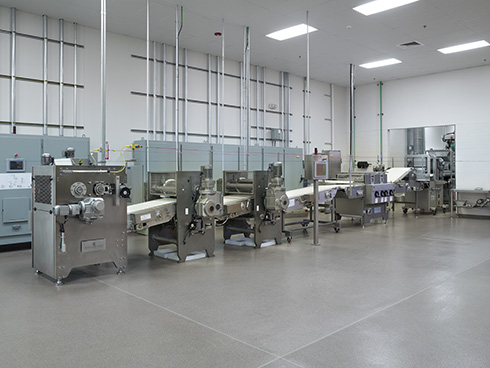
While batch mixing has traditionally been the standard approach, continuous mixing has become an increasingly attractive option for high-volume and industrial bakery operations. Exact Mixing, a division of Reading Bakery Systems, designs continuous mixing systems that improve process control, reduce variability, and support long production runs.
Determining whether continuous mixing is worth the investment requires evaluating its impact on efficiency, cost structure, and overall production stability.
Continuous Mixing vs Batch Mixing
Batch mixing produces dough in cycles, with ingredients weighed, mixed, discharged, and transferred before the next batch begins. This approach offers flexibility and familiarity, especially for bakeries that run short runs or make frequent formula changes. However, it can introduce variability related to operator timing, scaling accuracy, and batch consistency.
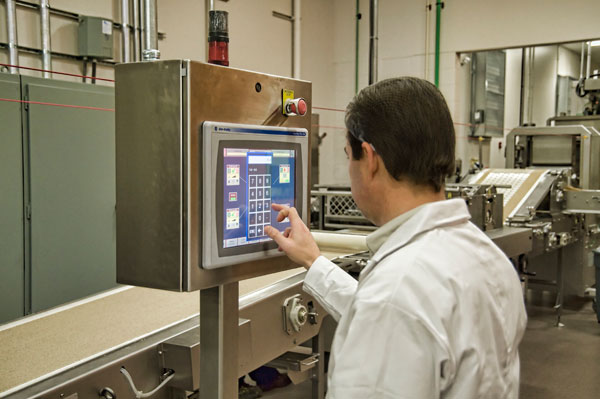
Continuous mixing operates as a steady process rather than separate batches. Ingredients are metered continuously and mixed at a rate matched to the production line. Ingredient handling, mixing, and process control are integrated into a single system, reducing manual intervention and improving consistency during extended production runs.
Yield Improvement and Waste Reduction
Yield is a critical financial driver in bakery operations. Continuous mixing improves yield by reducing batch-to-batch variation through accurate ingredient metering and uniform mixing, which limits overhydration, ingredient loss, and rework.
Because less dough is held in process, the product at risk during downtime is reduced, and restarts are more controlled. Even small yield gains can generate meaningful savings at scale and improve profitability over time.
Consistency and Downstream Stability
Dough consistency directly affects downstream processes, including dividing, molding, proofing, baking, and cooling. Variability introduced during mixing can lead to inconsistent product weight, uneven baking, and quality defects.
Continuous mixers deliver dough in a steady, uniform flow, which stabilizes downstream equipment performance. Consistent dough characteristics support accurate division, predictable proofing behavior, and uniform finished products, while reducing the need for operator intervention.
Throughput and Scalability
Increasing batch mixing capacity typically requires additional mixers, labor, and floor space, resulting in higher costs as production grows.
Exact Mixing’s continuous mixing systems scale more efficiently. A single continuous mixer can often replace multiple batch mixers and feed one or more production lines. As throughput increases, the cost per unit of output rises more slowly than with batch mixing, making continuous systems well-suited for high-volume bakeries and long production runs.
Labor and Energy Efficiency
Continuous mixing systems require fewer operators and manual intervention than batch systems. In many installations, one operator can oversee the mixing process regardless of throughput, improving labor efficiency and consistency.
Additionally, Exact Mixing’s continuous mixers require an average of 40 percent less energy than batch processes to deliver the same product yield. These reductions translate into meaningful annual energy cost savings at scale, while also lowering the environmental impact of bakery operations.
Capital Cost vs Long-Term Value
Continuous mixing systems generally require higher upfront investment than batch mixers due to integrated ingredient handling, loss-in-weight feeding, and control systems. However, initial cost alone does not reflect the total cost of ownership.
Over time, continuous mixing delivers operating savings that offset the capital investment. Improvements in yield, labor efficiency, energy usage, and equipment utilization reduce the cost per pound of dough produced and improve long-term returns.
Making the Case for Continuous Mixing
For many industrial bakeries, investing in continuous mixing is worth it when the system aligns with production volume, run length, and operational goals. While the initial investment may be higher than batch mixing, Exact Mixing systems deliver measurable, lasting value through improved efficiency, tighter process control, and predictable production outcomes.
To evaluate whether continuous mixing is the right fit for your operation, contact Exact Mixing to discuss your production requirements and system options.