Producing bread at an industrial scale requires more than high-capacity equipment. Manufacturers must consistently produce dough with the same hydration, development, and handling characteristics while maintaining efficient, high-volume production. As bakeries expand output and automate production lines, many are replacing traditional batch mixers with continuous mixing systems from Exact Mixing.
The Science Behind Bread Dough Mixing
Bread dough is especially sensitive to temperature, hydration, and gluten development, which makes consistent mixing essential. Yeast activity can change when dough temperature fluctuates, and the heat generated during mixing can make those changes harder to control in a batch process. Continuous mixing operates under steady-state conditions, helping maintain a more consistent dough temperature throughout the run and supporting reliable fermentation, proofing, and oven spring.
Bread formulas also tend to have higher absorption levels than products such as biscuits or crackers. Maintaining the same water-to-flour ratio across every batch can be difficult when ingredients are loaded and timed manually. A continuous system meters flour and water at controlled rates, keeping hydration consistent from the beginning of production to the end.
Gluten development is equally important. Under-mixed dough may lack strength, while over-mixed dough can lose structure, leading to differences in loaf volume and crumb. Continuous mixing offers more control over the amount of mixing energy applied to the dough, reducing variation between production cycles.
Engineered for High-Volume Bread Production
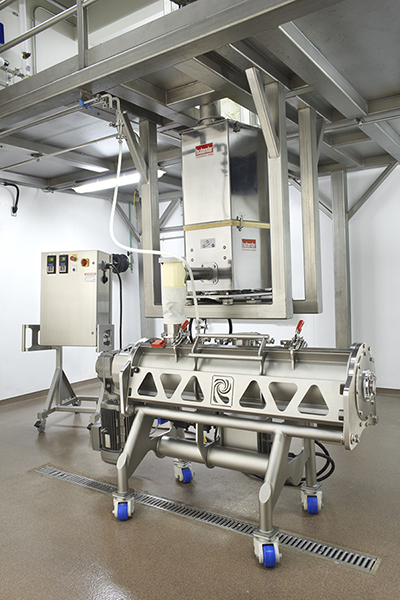
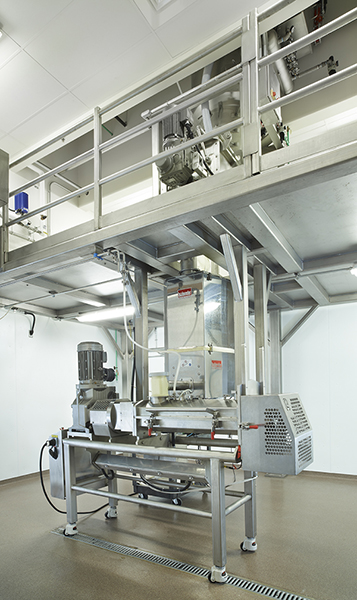
The HDX Continuous Mixer is designed specifically for bread dough. Its two-stage design separates ingredient incorporation from dough development. A twin-screw mixer first blends the ingredients into a uniform mass, then a single-screw mixer kneads the dough to the desired development level. This gives manufacturers precise control over mixing energy while maintaining dough temperature and yeast activity.
That control shows up directly in finished product consistency. In a side-by-side trial, two bun production lines, one on a continuous mixer, one on a batch mixer, were sampled every 30 seconds over an hour to track piece weight after forming. The continuous line held steady throughout while the batch line showed a wave-like variation that tracked each batch cycle, the exact inconsistency continuous mixing is built to eliminate.
The Operational Benefits Add Up
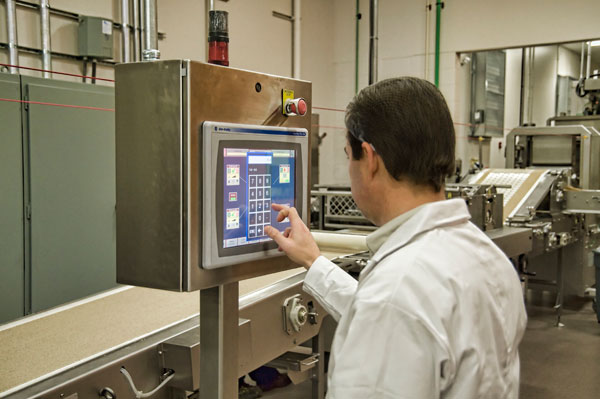
Continuous mixing improves more than dough quality. Automated metering, recipe control, and process monitoring allow one operator to oversee production at any throughput, helping keep labor costs stable as output grows.
With production rates from 1,500 to 10,000 kilograms per hour, a single HDX Mixer can handle far more volume than a typical batch mixer, reducing the need for additional equipment. Doubling batch capacity can increase system costs by 80 to 100 percent, while doubling a continuous system typically raises costs by about 25 percent.
Exact Mixing systems also use 30 to 40 percent less energy than conventional batch mixers. Together, these labor, equipment, and energy savings help reduce the cost of high-volume bread production.
Partner With Exact Mixing
Bread production at scale leaves little room for inconsistency, and the right mixing system is what keeps hydration, development, and dough temperature under control run after run. Exact Mixing has spent more than three decades helping bakeries make that shift, from process evaluation through installation and ongoing support.
If you’re weighing whether continuous mixing is right for your bread line, contact us to talk through your production goals.