In industrial baking, achieving a consistent product texture is both critical and complex. Even small variations in dough development can affect volume, structure, and mouthfeel. For high-volume bakeries, maintaining that consistency across long production runs requires more than experience. It requires precision technology that ensures every variable is controlled.
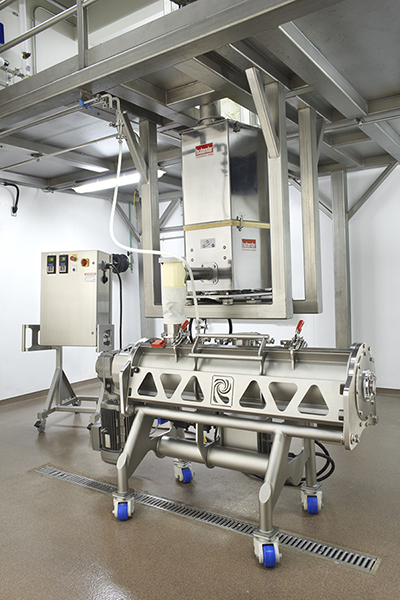
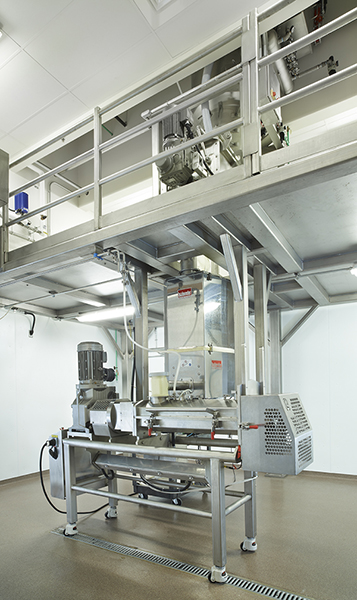
Continuous mixing from Exact Mixing delivers that precision. Unlike batch systems that stop and restart after each load, continuous mixers maintain a steady flow of ingredients, metering, blending, and developing them in real time. Ingredient ratios, temperature, and mechanical energy remain constant throughout production, producing dough that is uniform from start to finish.
This steady-state process eliminates batch-to-batch variation. Every gram of dough is mixed under the same controlled conditions, resulting in predictable texture, reliable structure, and repeatable quality across every shift.
Here’s how Exact Mixing systems achieve that level of consistency:
1. Steady-State Mixing Environment
In continuous mixing, dry and liquid ingredients are metered and blended in a constant, uninterrupted flow. This steady environment ensures that each portion of dough experiences the same mixing time, shear, and energy input. The result is uniform gluten development, hydration, and air incorporation, all critical factors for achieving consistent crumb structure, bite, and mouthfeel.
2. Precise Ingredient Metering
Exact Mixing systems use loss-in-weight feeders and mass-flow meters to control ingredient delivery with exceptional accuracy. This prevents over- or under-dosing of key components such as water, oil, or leavening agents, which can dramatically alter dough texture. Consistent ingredient proportions ensure that each piece of dough behaves identically in downstream forming and baking.
3. Controlled Energy and Dough Development
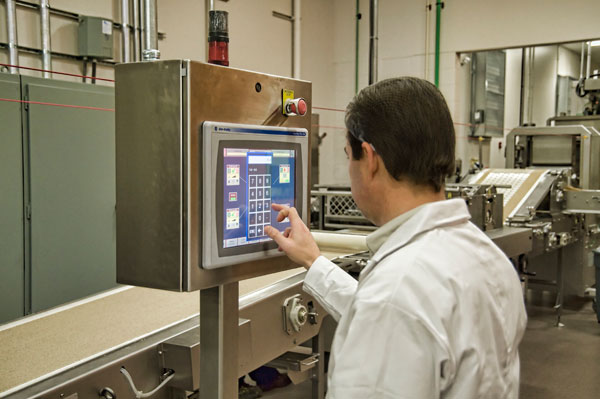
Continuous mixers regulate mechanical energy input and dough temperature in real time. If the dough develops too quickly or too slowly, the system automatically adjusts the mixing speed and energy levels to stay within target parameters. This prevents overmixing, undermixing, or temperature spikes that can lead to inconsistent density or texture in the final baked product.
4. Uniform Hydration and Air Distribution
Proper hydration and aeration are essential for consistent texture. Continuous mixers blend liquids and dry ingredients at precisely controlled rates, achieving even moisture distribution and uniform air cell structure. This creates consistent dough rheology, resulting in predictable shaping, proofing, and baking characteristics.
5. Elimination of Batch-to-Batch Variability
Because the process runs continuously, there are no “edges” between batches where texture inconsistencies can form. The system produces a single, uninterrupted dough stream with uniform physical properties. This consistency is especially valuable in high-volume production of crackers, cookies, snacks, and breads, where even slight textural variations can impact quality perception or yield.
6. Improved Downstream Performance
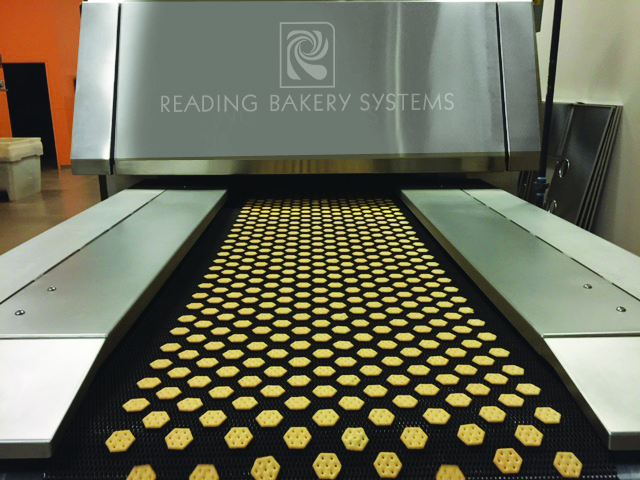
Uniform texture starts in the mixer but carries through the line. Consistent dough density and elasticity ensure predictable behavior during sheeting, cutting, extrusion, and baking. This leads to uniform oven spring, color, and bite across thousands of pieces. This is an essential advantage for large-scale bakery brands that depend on repeatable quality.
Exact Mixing: Where Consistency Meets Performance
Every element of dough texture, from structure and elasticity to moisture and air distribution, depends on how ingredients are mixed and developed. By keeping these variables constant, Exact Mixing’s continuous systems deliver the uniform dough quality that large bakeries need to produce consistent, high-performing products at scale.
To learn how continuous mixing can improve your bakery’s texture consistency and overall production efficiency, find our full range of mixer models or contact the Exact Mixing team for a consultation.