In a high-volume bakery, efficiency at the mixer can affect everything that follows, from dough consistency and labor needs to energy use, yield, and throughput.
Exact Mixing has spent nearly three decades developing continuous mixing systems that replace the stop-and-start batch process with a steady, automated flow. For industrial bakeries, that can mean tighter process control, fewer production losses, and a more efficient line overall.
Reduce Variation From the Start
Batch mixing separates ingredient delivery, measuring, mixing, and dough handling into distinct steps. Finished dough may also sit before forming, proofing, or baking, allowing temperature and consistency to shift.
Continuous mixing keeps the process moving. Ingredients are metered into the mixer at accuracies of ±0.25% or better, and dough exits as a steady stream at the rate the line needs it.
That consistency carries into the finished product. In one comparison of two identical lines, dough-piece weight on the batch-fed line had a standard deviation of 1.11 grams around a 32-gram target, compared with just 0.45 grams on the continuous line.
More uniform dough can also help downstream equipment run more steadily. In one oven test, gas consumption was more stable with continuously mixed dough, meaning the oven had less variation to correct during baking.
Improve Yield, Labor, and Energy Use
For high-volume bakeries, small gains in efficiency can make a noticeable difference over time.
Continuous mixing can improve yield by keeping ingredient delivery and processing more consistent, helping reduce losses from variation, downtime, and off-spec product. Yield improvements of 1% to 2% are common, with gains of up to 5% documented in some operations.
The process can also reduce labor by automating much of the loading, mixing, and dough handling that batch systems require. That allows fewer operators to manage the mixing stage.
Energy use can drop as well. In one plant test producing hamburger bun dough at 8,000 pounds per hour, continuous mixing used about 29% less total energy, with a median power draw more than 42% lower than batch mixing.
Scale Production Efficiently
Continuous mixing becomes more cost-effective as throughput rises. With batch systems, added capacity often requires larger mixers and more handling equipment.
Continuous systems scale differently. Doubling throughput may increase system cost by only 20% to 25%, since much of the metering equipment remains similar.
Exact Mixing systems support 50 kg/hour to more than 10,000 kg/hour, depending on the application. Labor needs also rise more slowly, with operators focused mainly on monitoring dough quality and system alerts.
Reduce Risk With Better Process Control
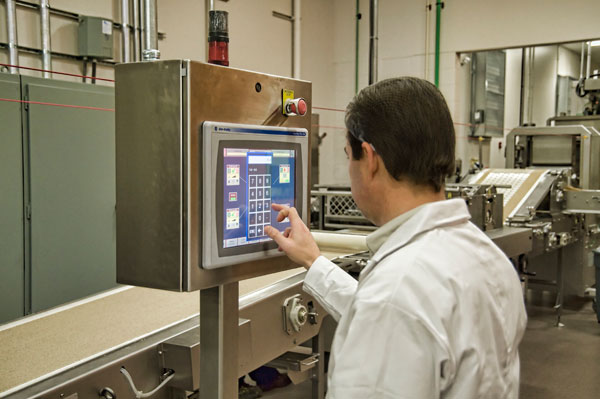
Continuous mixing keeps less dough in process while giving operators more real-time control. At 10,000 kilograms per hour, a batch system may have 5,000 to 6,000 kilograms of dough sitting in mixers, hoppers, or transfer equipment, compared with about 1,000 kilograms in a continuous system. If downstream equipment stops, that can mean significantly less product at risk.
Loss-in-Weight metering and load-cell blending also automatically weigh, record, and monitor ingredient delivery. If the process drifts from the set recipe, controls can flag or correct the issue before it affects a full batch, while creating a detailed production record for quality control and troubleshooting.
Is Continuous Mixing Right for Your Bakery?
For bakeries focused on higher throughput, tighter process control, and lower operating costs, continuous mixing can offer measurable advantages in yield, labor, energy use, and product consistency.
Contact Exact Mixing to discuss your production goals and find out which system is the best fit for your line.