Biscuit dough is especially sensitive to hydration, ingredient distribution, and overmixing. For industrial bakeries, maintaining that balance across long production runs is difficult with stop-and-start batch processes.
Exact Mixing’s advanced continuous mixing systems give manufacturers tighter control over ingredient delivery, dough development, and throughput from the start.
Match the Mixer to Your Production Line
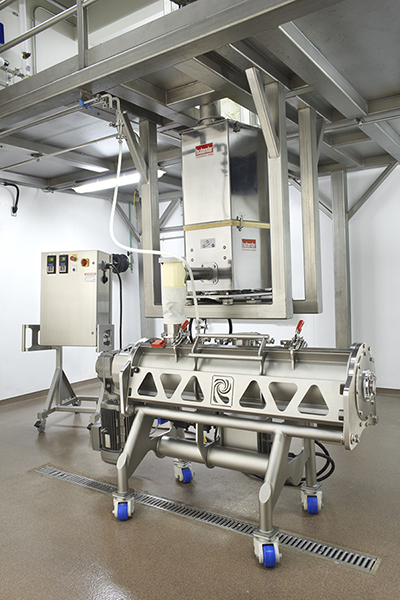
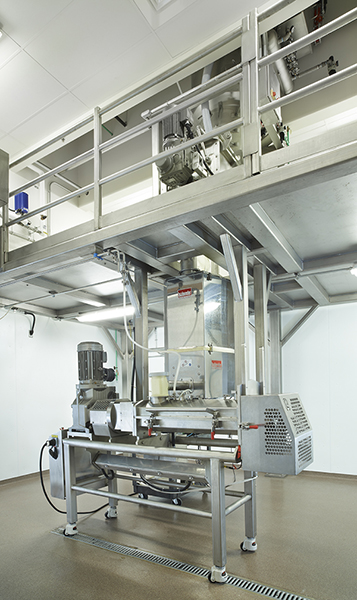
For biscuit-focused production, the LDX Continuous Mixer is a strong fit. It blends the dry ingredients first, adds flour just before mixing, and helps avoid unnecessary dough development. Production can start around 1,500 kg/hour, giving manufacturers control without overworking delicate biscuit dough.
The MX Continuous Mixer may make more sense for bakeries switching between biscuits, cookies, and crackers. Its broader application range and quick changeovers give mixed-product lines more flexibility.
If biscuits are the main product, the LDX is usually the better starting point. For shared production, the MX may be more practical.
Keep Production Moving
Batch mixing divides ingredient delivery, measuring, mixing, and dough discharge into separate steps. One batch must move through the cycle before the next can fully take its place, creating regular starts, stops, and waiting periods.
Continuous mixing combines those stages into an ongoing process. Ingredients are metered directly into the system, mixed continuously, and discharged as a steady stream of dough rather than one large mass every 10 to 15 minutes.
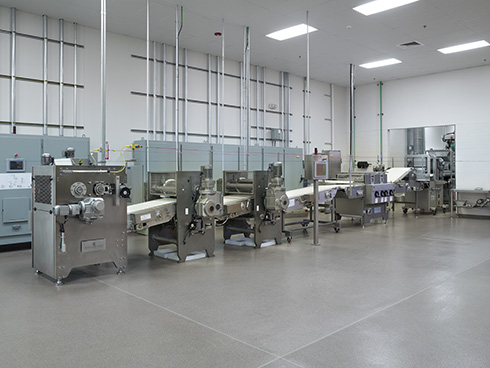
That uninterrupted flow can significantly increase output. At comparable scale, continuous mixing systems can support production volumes up to four times higher than traditional batch equipment.
Improve Dough Consistency
Accurate ingredient delivery is especially important for biscuits, where small changes can affect machinability, shape, texture, and finished-product quality.
Exact Mixing systems use Loss-in-Weight metering technology to deliver ingredients at accuracies of ±0.25% or better, continuously comparing actual flow with the programmed set point.
In a side-by-side plant test comparing consistency, continuous-mixed dough showed a 0.45-gram standard deviation around a 32-gram target, versus 1.11 grams for batch mixing, demonstrating much tighter piece-weight consistency.
Limit Rework and Off-Spec Dough
For biscuit dough, uneven hydration can lead to dry pockets, overly wet areas, and more off-spec product.
The LDX Continuous Mixer helps address this by blending ingredients before introducing flour in the final stage of mixing. That sequencing helps limit unnecessary flour development while improving distribution throughout the dough.
More controlled hydration and ingredient sequencing can reduce rework, waste, and downstream processing problems.
Reduce Labor at the Mixing Stage
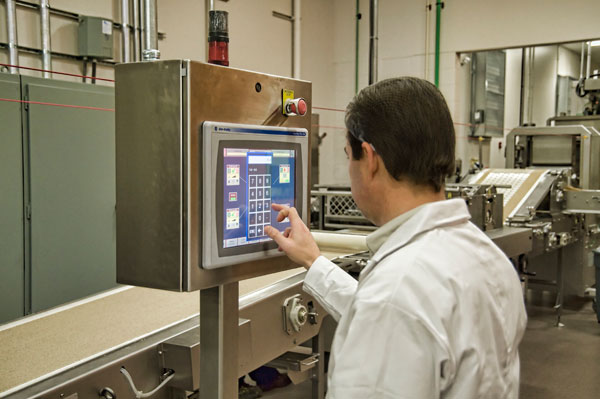
Continuous mixing also automates many tasks that require hands-on work in a batch process. The system coordinates ingredient metering, mixing, recipe control, and dough discharge, reducing repeated manual loading and measurement.
A continuous mixing line can run with minimal operator involvement, even at higher throughputs. A comparable high-speed batch line may require up to three employees per shift, including ingredient handling and dough movement.
That allows employees to spend more time monitoring quality and overall line performance rather than managing individual batches.
Get More From Your Biscuit Production Line
Continuous mixing can help biscuit manufacturers achieve more consistent dough, higher throughput, less waste, and a more efficient production process from mixing
Exact Mixing can help match the right system to your biscuit formulation, production volume, and line requirements. Contact our team to discuss your goals and get started.