Many manufacturers reach a point where traditional batch mixing becomes increasingly difficult to scale efficiently. While batch mixers remain a reliable solution for many bakeries, high-throughput operations often face challenges related to consistency, labor requirements, throughput, and process control.
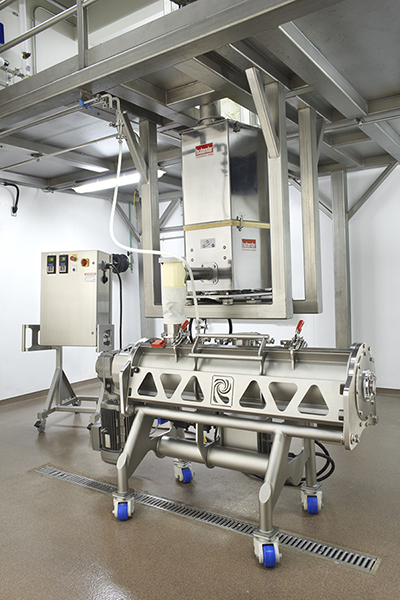
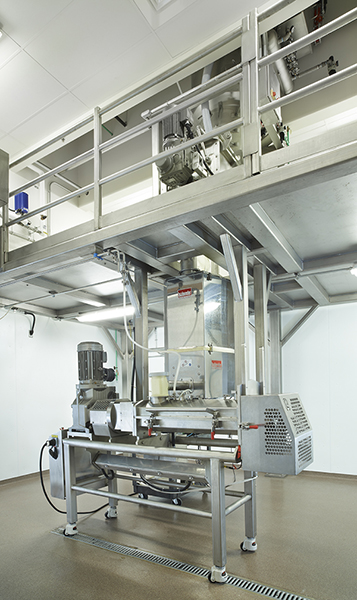
For these reasons, many large bakeries are replacing batch mixers with continuous mixing systems from Exact Mixing. By continuously metering ingredients and delivering a steady flow of dough, continuous mixing offers a more efficient approach to supporting modern bakery production.
Improving Product Consistency
One of the primary reasons bakeries transition to continuous mixing is to improve product consistency.
In a batch process, each batch is mixed separately. Even with carefully controlled recipes, slight differences in ingredient additions, mixing conditions, dough temperature, and operator adjustments can create batch-to-batch variability.
Continuous mixing minimizes these fluctuations by continuously metering ingredients into the mixer at controlled rates. This helps maintain more consistent dough density, moisture content, and ingredient distribution throughout production.
In a study comparing a batch line to an Exact Mixing continuous mixing line, the continuous line demonstrated significant reductions in product variability, with less than half the product weight variation of the batch line.
Increasing Production Capacity
As demand grows, expanding a batch mixing operation often requires additional mixers, operators, and floor space. This approach can increase operational complexity while creating new opportunities for process variability.
Continuous mixing provides a different path to growth. Rather than producing dough in individual batches, continuous systems deliver a constant supply of dough matched to production line demand.
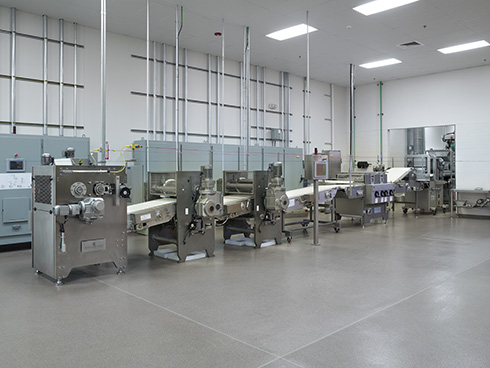
This allows bakeries to increase throughput while maintaining consistent production conditions. For large-scale manufacturers producing breads, buns, rolls, crackers, pretzels, pizza dough, and snack products, continuous mixing offers a scalable solution for supporting higher production volumes.
Reducing Labor and Operating Costs
Labor efficiency is another major factor driving the transition to continuous mixing.
Batch operations require repeated ingredient loading, mixing, discharge, and batch changeovers throughout the production day. Continuous mixing automates much of this process through integrated ingredient handling, gravimetric metering, and automated controls.
As a result, bakeries can often reduce manual intervention while improving process consistency.
Continuous mixing can also contribute to lower operating costs through improved ingredient utilization, reduced product giveaway, and lower energy consumption. In testing conducted by Exact Mixing, continuous mixing reduced total energy consumption by approximately 29% and lowered median power demand by approximately 42% compared to batch mixing.
Enhancing Process Control
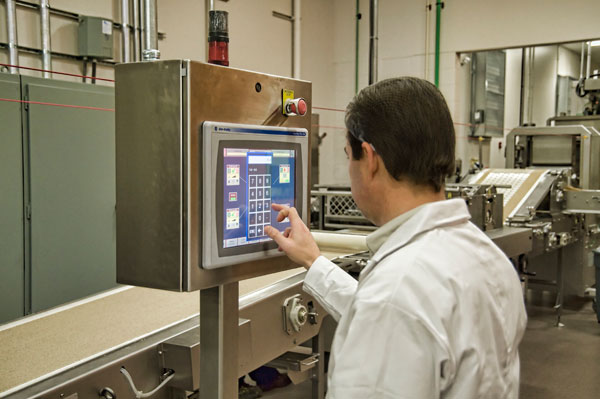
Modern bakeries need greater visibility into production than ever before. Continuous mixing systems provide advanced process controls that monitor ingredient feed rates, liquid additions, throughput, and recipe parameters in real time.
Integrated recipe management and production data collection help manufacturers maintain standardized production procedures while improving traceability and process monitoring.
This level of automation allows operators to make informed decisions and maintain tighter control over production conditions throughout a run.
Supporting Food Safety Initiatives
Food safety remains a top priority for industrial bakeries, and equipment design plays an important role in maintaining safe production environments.
Continuous mixing systems support food safety efforts through enclosed ingredient handling, automated metering, improved traceability, and hygienic equipment designs. By reducing manual ingredient handling and creating more controlled production conditions, bakeries can strengthen sanitation programs while maintaining efficient operations.
The Future of High-Volume Bakery Production
As bakery production requirements continue to evolve, many manufacturers are finding that continuous mixing provides advantages that extend beyond simply replacing a mixer. Improved consistency, greater throughput, lower operating costs, enhanced process control, and food safety benefits all contribute to a more efficient production environment.
For more than 25 years, Exact Mixing has helped industrial bakeries transition to continuous mixing with innovative technologies that improve consistency, efficiency, and production control. If your bakery is evaluating ways to increase capacity, reduce costs, or improve product quality, contact Exact Mixing to find the right solution for your operation.