In high-volume biscuit production, dough consistency is what keeps the entire operation running smoothly. Even small variations can impact sheeting, baking, and final product quality. That is why many industrial bakeries are shifting away from batch mixing and adopting continuous mixing systems from Exact Mixing.
How Does Continuous Mixing Work?
Continuous mixing replaces the stop-and-start nature of batch production with a steady, uninterrupted process. Ingredients are added, mixed, and discharged continuously, creating a consistent stream of dough.
The process begins with precise ingredient handling. Dry ingredients such as flour and sugar are fed through loss-in-weight feeders, while liquids like water, oils, and syrups are delivered through controlled lines. Each ingredient is metered at exact rates to maintain a consistent formulation.
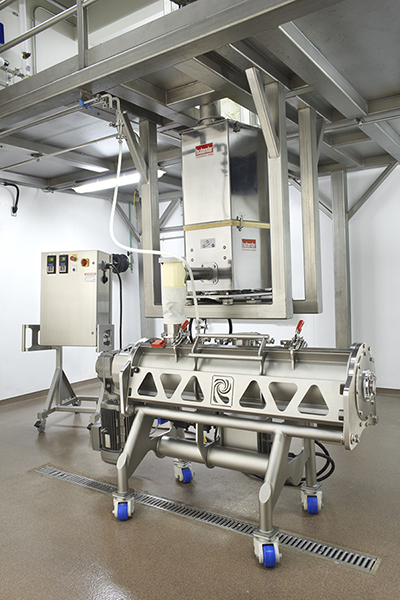
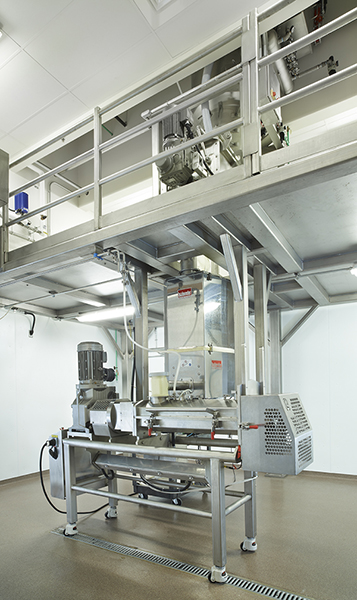
As ingredients move through the mixer, they are incorporated progressively along a continuous flow path. Mechanical mixing elements work the dough over a defined residence time, ensuring even hydration and uniform distribution of both major and minor ingredients.
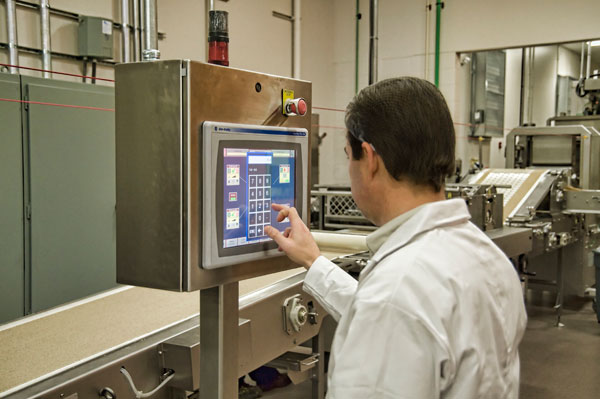
Exact Mixing’s systems are supported by an integrated operator interface that provides real-time visibility into the process. Operators can monitor key parameters such as ingredient feed rates, mixing intensity, dough temperature, and throughput, while recipe-driven automation ensures consistent results across production runs. Built-in trend data, alarms, and performance feedback help maintain stable operating conditions and quickly identify any deviations.
What Are the Advantages of Continuous Mixing?
The EX Continuous Mixer is designed for stiff, low-moisture biscuit doughs, delivering consistent results through controlled, low-energy mixing. For high-volume bakeries, this translates into meaningful gains in both product quality and operational efficiency.
Line Performance and Yield
By eliminating batch-to-batch variation, continuous mixing maintains consistent moisture, temperature, and formulation, improving dough consistency and weight control. This reduces giveaway, scrap, and ingredient loss.
Uniform dough also improves biscuit size, texture, and bake color while supporting smoother sheeting, gauging, and cutting. Fewer interruptions and reduced startup and shutdown losses further improve yield and efficiency.
Throughput and Flexibility
Continuous mixing removes downtime between batches, delivering a steady dough supply that supports higher throughput. With output of up to 7,500 kg per hour, the EX Mixer meets high production demands.
As capacity increases, the system scales efficiently. Doubling throughput typically raises costs by only about 20%, compared to nearly 100% for batch systems, since much of the feeding equipment remains unchanged. This makes continuous mixing more cost-effective at higher volumes.
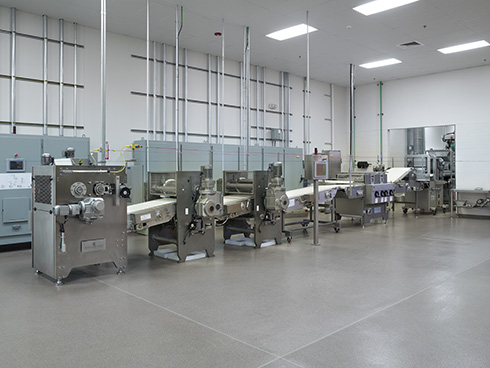
Formulations can also be adjusted easily, and a single system can increase output or feed multiple lines as demand grows. Its steady output integrates seamlessly with automated biscuit lines, improving synchronization and reducing bottlenecks.
Energy and Labor Savings
Exact Mixing systems use significantly less energy than batch mixing while producing the same output, with reductions of around 29% overall and even greater savings in typical operations.
Labor requirements are also lower. Automated ingredient delivery and simplified cleaning reduce manual intervention, allowing a single operator to manage the system alongside other tasks, cutting labor needs by roughly half.
Rethinking Biscuit Production
For high-volume biscuit production, continuous mixing offers a more reliable and efficient way to operate at scale. By replacing batch variability with a steady, controlled process, industrial mixers from Exact Mixing help bakeries improve consistency, streamline production, and make better use of time, labor, and ingredients.
If you’re looking to optimize your biscuit production, Exact Mixing can help you evaluate the best solution for your operations. Contact us today to get started.